This Week in Space 225 Transcript
Please be advised that this transcript is AI-generated and may not be word-for-word. Time codes refer to the approximate times in the ad-free version of the show.
Tariq Malik [00:00:00]:
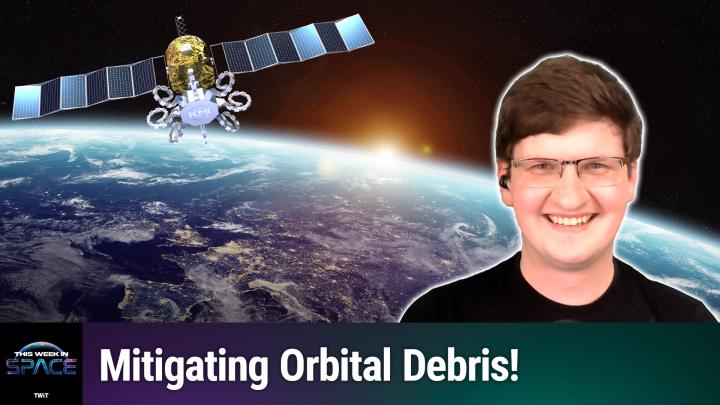
Coming up on This Week in Space, SpaceX has big plans for Louisiana. Expect 30 Starship launches a day. We'll have to wait until 2030 for that, but President Trump announced a new US Space Academy, not to be confused with Police Academy, but we'll see if there's some spinoff films for that. And we're going to find out what it takes to use creepy tentacles to grab satellites in space from KMI Space and their plans right now. Check it out.
Rod Pyle [00:00:32]:
This is This Week in Space, episode number 225, recorded on August 28th, 2026: Get a Grip! Hello and welcome to another episode of This Week in Space, the Get a Grip edition. I'm Rod Pyle, editor-in-chief of Ad Astra Magazine, and I'm here with the recently returned to our good United States, Tariq Malik. Welcome back.
Tariq Malik [00:00:58]:
I'm back! From outer states. Get it? Get it? Get it?
Rod Pyle [00:01:02]:
Singapore anyway.
Tariq Malik [00:01:04]:
Yeah. Okay. There you go.
Rod Pyle [00:01:05]:
How was it?
Tariq Malik [00:01:07]:
It was good. It was good. I had a nice relaxing vacation. And thank you. Thank you all for your patience for there. There's a beep. Oh my gosh. I got to stop this beeping.
Tariq Malik [00:01:18]:
I'm sorry, everybody.
Rod Pyle [00:01:19]:
Well, while he's stopping his beeping, today we'll be talking with Adam Call of KMI Space to talk about their recent research. And experimentation, direct experimentation into orbital debris mitigation aboard the International Space Station. This is a really cool episode.
Tariq Malik [00:01:36]:
It's exciting.
Rod Pyle [00:01:37]:
Young guy, successful way before Tariq and I were even thinking about what the heck we were going to do when we got older and looked at our failing retirement plans or whatever. I don't know if I should say that about you, but I can say it about me. But before we get to that, We have a space joke from friend of the show Bruce McCandless.
Tariq Malik [00:01:58]:
Bruce! Wait, Bruce McCandless III?
Rod Pyle [00:02:01]:
Bruce McCandless III, yes.
Adam Kall [00:02:03]:
Yay!
Rod Pyle [00:02:03]:
One of our favorites. Tariq.
Tariq Malik [00:02:05]:
Yes, yes, Rob.
Rod Pyle [00:02:06]:
Why do librarians love Mars so much?
Tariq Malik [00:02:08]:
I don't know, why?
Rod Pyle [00:02:09]:
Because it's the best red planet.
Tariq Malik [00:02:12]:
Oh, I get it, I get it. Oh, that's awesome. That's a good one, Bruce. That's a good one. Dig it.
Rod Pyle [00:02:18]:
Now, I've heard that some librarians want to shush us into permanent silence when it's joke time in this show, but you can help by sending us your best, worst, or most indifferent space joke @twist@twit.tv. We will read it on the air, we will cherish it on the air, and we will blame it on you if it goes over like, uh, so much poop in a punch bowl. But before we, uh, diverge too much, let's go on to headline news.
Tariq Malik [00:02:44]:
I've been practicing headline news. I nailed that, right? Look at that, look at that.
Rod Pyle [00:02:52]:
Wow, that's impressive. So SpaceX hits the Big Easy. What the heck is going on?
Tariq Malik [00:02:57]:
We got a lot of SpaceX news this week, Rod. Like, a lot. The biggest is probably what you just, uh, alluded to. SpaceX is bringing Starbase to Louisiana. In fact, they're gonna build a new Starbase Louisiana there. They pledged, um, something like $100 billion to build not one, not two, but 5 different launch complexes, each one of them with 2 launch pads. So that's 10 launch pads and all, because they want to launch, uh, uh, 30, uh, 30 times a day. Is that what they're trying to say? Yeah, something like that, uh, eventually.
Tariq Malik [00:03:34]:
And they really need to go all out. They need more launch pads, uh, completely. So I mean, that's huge news. Huge news. If you thought watching launches out of Starbase was crazy in Texas, I mean, this is the Gulf Coast. It's the— I'm gonna get it wrong— the Vermilion Vermilion Parish is what they call it. That's this part of the Gulf Coast. And it's going to be like the largest project in state history, one of the largest projects in Louisiana.
Tariq Malik [00:04:04]:
We— oh my gosh, I cannot speak— Louisiana's history. And it's going to be their biggest center for spaceflight operations when it's done. It's going to take them a while, though, like 2030 or so, it seems like.
Rod Pyle [00:04:16]:
So there was a time when I think Elon Musk actually believed that nobody was going to care about the part of Texas that he was in, and he rapidly discovered that a lot of people cared about fish and windows and birds and, you know, all kinds of other wild things. Do we expect to have the same issues in Louisiana, or is it because— I mean, I think it's a partner, they kind of put a lid on that?
Tariq Malik [00:04:39]:
I think only time will tell. Texas was not an unfriendly partner of SpaceX at the get-go for Starbase, and while there were a lot of— a bit of NIMBY in the beginning, SpaceX was able to work through a lot of those largely by buying up everybody. And you can expect that there's probably going to be a lot of that going on here as well. But, um, but it does seem because they're bringing so much and, uh, and, you know, uh, 10 launch pads means a lot of jobs, means a big manufacturing building because they're probably gonna have to build stuff there too. That's what SpaceX has shown that they want to do at these sites is they build the ships and then launch the ships from there too. That's a lot of jobs. Rod. And so they're probably gonna get a lot of, a lot of cooperation as long as they don't rush things too much and outstay their, their warm welcome there.
Tariq Malik [00:05:26]:
But they're talking about, like I said, 30 times per day of these Starship launches. That's 10,000 flights a year. 10,000, Rod, flights a year. Isn't that crazy?
Rod Pyle [00:05:36]:
Might, might get us a human landing system.
Tariq Malik [00:05:39]:
Well, you know, you know, right, you know what you won't see launching 10,000 times a year by then though is, is Falcon 9. That's our next story. So, and that's on line 23, because once Starship gets operational, Elon Musk has said that they are planning to retire the Falcon 9.
Rod Pyle [00:05:58]:
Most used, most successful, most reliable flight system offline. Yeah, just nuts. Well, is he gonna— did he say he's gonna kill it, or is he possibly gonna spin it off and let it operate as a separate business unit?
Tariq Malik [00:06:13]:
Well, it's what, what he said is that they're going to stand it down in order to go ahead and shift everything over into Starship fully. Like, once, once Starship is fully up and running— and what fully up and running means is unclear— but he said that they would wind down the Falcon operations, which would include, uh, Falcon 9 and Falcon Heavy, uh, that, that winding it down is inevitable is what he was saying, uh, so that they could, uh, uh, uh, get, uh, uh, they would shift all of their production resources to Starship at that point once they get the launch rate up to several times per day. But you're, you know, you raise a really good point. If it ain't broke, why fix it, right? They've actually already started to stand down from Starlink launches out of Florida. They're gonna move them all to Vandenberg now. And they'll just have the crew launches and maybe some part of some commercial partner launches out of there right now. So we're starting to see the early signs of that as they scale up this other ship. And And while you're right, it is like the most successfully flown rocket of all time.
Rod Pyle [00:07:18]:
Yeah, sell it to ULA.
Tariq Malik [00:07:20]:
If they— if they— if they— wow, that, that burns, man. If they— if they do the same with Starship, which, you know, they're getting closer to at least doing a full recovery, yeah, then why would you keep it? I mean, I don't have a Model T in the back of my, you know, garage, you know, and that, that, that, that worked. for a while, you know, too.
Rod Pyle [00:07:40]:
So I think the only, the only real reason would be to be able to target specific orbits that Starship might not be able to do without some additional transport. But you can also do that with Rocket Lab and other companies. All right, we should, we should move along.
Tariq Malik [00:07:54]:
Yeah, sure. It's just, just finally just let everyone know that if you were still wondering about that Starship from Flight 13 that came back and splashed down in the Indian Ocean, it is still there. But SpaceX officially recovered it, and it's now on a barge on its way back to Texas.
Rod Pyle [00:08:06]:
Well, with this really cool ship that that sinks itself and slipped under it and then came back up to support it.
Tariq Malik [00:08:14]:
Isn't that cool?
Rod Pyle [00:08:14]:
Yeah. I thought, you know, whose idea was it to build that ship? I'd never seen that before. So that's pretty neat.
Tariq Malik [00:08:20]:
Yeah. All right. So that's going to be in a museum somewhere. And then just—
Rod Pyle [00:08:25]:
Just a museum.
Tariq Malik [00:08:26]:
Yeah. And then just really quickly, just a note, because we'll probably talk more on this in a full episode in the weeks to come. The Roman Space Telescope does launch on Sunday, August 30th. That's this weekend as we are recording, we hope. 7:36 AM. The weather is looking dicey, but we'll see. It's a Falcon Heavy launch. You know, we were just talking about Falcon rockets.
Tariq Malik [00:08:47]:
Yeah, so, so keep, keep your eyes peeled for that. You can visit us at space.com for live coverage there. We'll have some wrap stories. It's gonna be really, really great. And if you missed it, there was an almost full moon last night. Did you, did you see the lunar eclipse last night, Rod?
Rod Pyle [00:09:00]:
I, I set my alarm and I forgot.
Tariq Malik [00:09:03]:
You forgot? You set your alarm for 9 o'clock at night? That's when it was, at 9 o'clock at night?
Rod Pyle [00:09:07]:
Yeah, yeah. And then I forgot to go out and look.
Tariq Malik [00:09:09]:
I'll admit I didn't feel well yesterday, so I went to sleep at 9, but it was pouring rain all day. But this—
Rod Pyle [00:09:14]:
Why didn't you feel well, Tariq? Could it have been something with your stomach?
Tariq Malik [00:09:19]:
Yeah, I might have been having some gastric issues. Cat's out of the bag. I had some, I had some red meat for the first time in like a month or two yesterday, and it did not agree with me.
Rod Pyle [00:09:30]:
So is there another kind of meat?
Tariq Malik [00:09:33]:
Well, yeah, there's chicken. There's like chicken and there's fish, right?
Rod Pyle [00:09:36]:
That's not meat. Okay, go ahead.
Tariq Malik [00:09:38]:
Anyway, yeah, this is the last lunar eclipse eclipse really of substance until August 2028. New Year's— not August, New Year's Eve 2028. That's not August at all. So, so if you missed it, you've got some time to wait, uh, because we're not going to have a really, really good one up until that total lunar eclipse. But this was like a 90, 93, 96% lunar eclipse. It still turned red, which is pretty cool to see.
Rod Pyle [00:10:03]:
You know, we need to start having a direct show feed for Jammerbee. So that his little bits of knowledge that we get during every episode could just come up on the screen while we're talking.
Tariq Malik [00:10:13]:
Yeah, the other white meat, pork, right? There's Larry.
Rod Pyle [00:10:16]:
Oh no, that's Larry.
Tariq Malik [00:10:17]:
Yeah.
Rod Pyle [00:10:18]:
Jammer B say, oh, heavy lift semi-submersibles, how they get huge oil derricks out to sea. Didn't know that. Yeah, they just splash the derrick and then towed it.
Tariq Malik [00:10:27]:
I thought they just dropped it from the sky.
Rod Pyle [00:10:29]:
Well, no, but I mean, you know, you'd— oh, stop it, you. And I guess we'll cover this next week because we're kind of out of time. But just so it's said, Donald Trump, US Space Academy.
Tariq Malik [00:10:41]:
That's right. Executive order signed just before we started recording our episode today. There is now going to be a US Space Academy and not the one at Space Camp. And it's really unclear how this is going to work. I haven't read the language. Yeah, it will be beautiful is what he said. He said this while he was giving the astronauts of the Artemis II mission the Congressional Space Medal of Honor. That's the highest honor they can give astronauts from the, from the government.
Tariq Malik [00:11:09]:
It did take quite a long time. He kept the entire astronaut corps waiting for an hour. They were delayed before they started, before they could start talking about all of this. And in the middle of honoring those astronauts, he signed an executive order announcing a new space academy, which would, from my, my understanding, be some kind of university education apparatus.
Rod Pyle [00:11:28]:
Right.
Tariq Malik [00:11:28]:
That would act as a feeder into NASA as a recruitment and for Space Force.
Rod Pyle [00:11:32]:
So, which is interesting because it kind of would seem like that would wrap into Jared Isaacman's effort to, you know, bring in a new workforce to NASA since the old one was kind of gutted a few months back. I don't know if there's any connective tissue there or not. Do you?
Tariq Malik [00:11:49]:
I'm not— I'm not like— I'm not sure either. But what it— what I read it as from how Trump described it was like a, a way to get a foot in the door at NASA almost like, like ROTC, you know, you do ROTC in college, and then you become an officer in the military, and then you have to serve for like an X amount of time. So like you get your university education paid for, and, and then you, you would do your service. I don't know though, if that's what it is. It's, he said, to be a feeder for NASA, and for the Space Force, and also for civilian space companies. So it sounds like a job feeder thing. into these places.
Rod Pyle [00:12:30]:
So another thing that we got rooked out of by being too old.
Tariq Malik [00:12:35]:
Yeah, I know. I would have totally done that. That sounds—
Rod Pyle [00:12:37]:
Darn right.
Tariq Malik [00:12:38]:
Yeah.
Rod Pyle [00:12:39]:
Last question for the editor-in-chief of Space.com.
Tariq Malik [00:12:43]:
Yes.
Rod Pyle [00:12:44]:
Quote, our regular freelance contributor Jess Bry has signed a deal to publish his own graphic novel called Kill Ride, coming in 2027. It's about a sentient killer roller coaster. What does that have to do with Space.com?
Tariq Malik [00:12:57]:
I don't know. What is that? Where did you get that from? This is news for me.
Rod Pyle [00:13:01]:
That was on the email I got from space.com today. It was like the bottom item. And I thought, that's a very cool thing, but huh?
Tariq Malik [00:13:08]:
What email did you get from— I wrote the email today. What are you talking about? It's—
Rod Pyle [00:13:13]:
where is it? Was that possibly Live Science? I'm pretty sure it was space.com.
Tariq Malik [00:13:21]:
I don't know. I didn't put that in my email today.
Rod Pyle [00:13:24]:
Well, but do you, do you inject all the ads or do they just kind of go in by random rotations?
Tariq Malik [00:13:28]:
Oh, I don't put the ads in there. No, no. Yeah. I just write the, I write the copy. That's why it says like, keep looking up or have a great Friday.
Rod Pyle [00:13:35]:
Here we go. Watch This Space.
Tariq Malik [00:13:36]:
Oh, that's a different, that's a whole different newsletter.
Rod Pyle [00:13:39]:
Well, it's scottspace.com.
Tariq Malik [00:13:42]:
Congratulations, Jeff, on, on, uh, signing a deal to publish your graphic novel. All right. Kill Ride. Yeah.
Rod Pyle [00:13:49]:
Okay, we'll have to have him on the show. John's giving us the hairy eyeball, so let's, uh, let's move on to the rest of our show. We will go to a quick break and we'll be right back with KMI Space. Stay with us. And we are back with Adam Call of KMI Space. Good day, Adam. How are you?
Adam Kall [00:14:07]:
Hello, I'm doing great.
Rod Pyle [00:14:09]:
Well, thanks for joining us today. I spotted this story about a month ago, I guess, and I thought, oh, this is just too cool. We got to get this guy on. So, uh, can you give us an idea of what KMI Space does and how you got started?
Adam Kall [00:14:26]:
Absolutely. Yeah, KMI Space is focused on relocation in space. So taking something that's already gone into orbit, it's already been intended to perform its mission, and now needs to move to a new position. So not an OTV, not something integrated on the ground, but post-launch integration and movement is the core of our field.
Tariq Malik [00:14:47]:
And can I ask, Adam, you know, what was your path, I guess, to space here? That's usually a question I ask everybody on, on the show. And we all have different, different ways, I guess, to get there. What was your, you and your team's approach to space and, and, and Bionika?
Adam Kall [00:15:07]:
Well, my personal answer starts in junior year physics class of high school, when I am learning about friction and thinking, man, this makes everything way more complicated. I guess I'm going to work in space where there's no friction and everything's easy. Little did I know about everything being an ellipse and it being way more complicated, but that was kind of a moment that I clearly remember of setting my sights on space as not just an easier way to get out of a physics homework, but also an exciting prospect of the cutting edge and the frontier. The actual journey to it for me and my co-founders was meeting in college as friends, never expecting to start a business together, and after leaving college, realizing we were all doing really well in our jobs and it wasn't really accounting for anything. It wasn't amounting to any change for humanity or any benefits. We said, if we all come together, can we do something great? Um, for the whole team, this whole journey has really been one of tenacity, of sticking with a process, sticking with a government bureaucracy that can at times be incredibly slow, but also provides an amazing opportunity for those who are willing to put up with it to get to space and deliver amazing products.
Tariq Malik [00:16:09]:
But you had an internship at NASA, right? I was reading, or no?
Adam Kall [00:16:13]:
Absolutely. That was, that was in between my personal goal of getting to space and in between starting the company. company is I was in college and I said, oh, I want to go into space, I should get an internship at NASA. I asked my professors and they said no student from here has gotten an internship at NASA in 20 years, which to the normal person would be a sign of, oh, maybe I shouldn't pursue that. And to me was a sign of, oh, I definitely need to pursue this now. It's been too long. Um, and I'm happy to say that that internship at Goddard Space Flight Center was not only incredible and amazing— I got to eat lunch in front of the James Webb Space Telescope because they were cleaning it at the time. So I like to imagine my face still imprinted on those mirrors just a little bit.
Adam Kall [00:16:50]:
I'm sure scrubbed it. But, um, after I went, uh, every year since then there's been a student from my university going for a NASA internship. I kind of restarted that cycle locally.
Tariq Malik [00:17:01]:
That's awesome. That's awesome. My daughter would be proud because of your computer science background and data science there. She, she's looking to go into that, uh, as well. So sorry, Rod, go ahead.
Adam Kall [00:17:09]:
Fantastic field.
Rod Pyle [00:17:10]:
So, so that's your, your adult entry into the space trade. But surely there was something when you were a kid, like there were for most of us, where you just got that idea of Well, in my generation, way, way long ago, it's like, ooh, space looks fun and easy. You just get in a big silver rocket and push the up button and everything else happens on its own. Turned out to be a little more complex than that. But was there a moment when you were younger where you said, oh man, that's just too great?
Adam Kall [00:17:35]:
There was actually. Uh, I was very young, in fact. And for context, I have an older sister who's 3 years older. And so my parents put me and my sister in a summer science camp that was split by age. And I end up in this amazing laboratory. It's got the science tables, it's got the cabinets, and we're learning about space. And I'm sitting in there and I am soaking it in. I'm having an amazing time for about 24 minutes before an organizer comes in and says, whoops, there's been a mix-up.
Adam Kall [00:18:02]:
This is the older room for his sister.
Rod Pyle [00:18:05]:
Wow.
Adam Kall [00:18:05]:
He needs to go out to the playground where they're going buggy and they're just catching bugs all day. That's their science experiment. I hate bugs. I'm arachnophobic. I absolutely hate bugs. So this was not only one of the highest highs of that summer of just this 24 minutes of learning about space and learning this vast world that's out there, immediately juxtaposed against catching bugs. I was like, I'm going back. I'm going to get back to space somehow, some way.
Adam Kall [00:18:30]:
So that was definitely the early childhood moment of being introduced to it and having it be taken away just fast enough for me to say, lifelong commitment. I've got to learn more now.
Rod Pyle [00:18:39]:
Well, definitely what you're doing now is cooler than etymology, I think. It's etymology, right? Bug study?
Tariq Malik [00:18:45]:
And yeah, that's what I learned from that Donald Duck special. Yeah.
Rod Pyle [00:18:49]:
Yeah, I have an etymology story, but I'll save it for later. So let's just jump right in. The article that I read that was fascinating to me, partially because it was reminiscent of something I wrote about at JPL, was the REACH system, R-E-A-C-C-H, which, like any good space technology, is an acronym. So tell us what the acronym is for and what the heck it does.
Adam Kall [00:19:13]:
I will be honest, I can't, because it used to be an acronym that stood for something around reactive cloth, because this actually was kind of an orphan study from a university, from the University of Southern California, where they developed it. They made a really cool technology and it sat on a shelf. And so our, our innovation was seeing it and realizing this has application in space. Let's take this experiment. We got an exclusive license to develop it further. And as we were developing and making it ready for space, that acronym just stuck around. So I know my other co-founder Austin took the same acronym and made a better alliteration for it for the space mission. But I'll be honest, to all of us here, it's just the REACH.
Adam Kall [00:19:56]:
It's the REACH system. So I can look that up after the show and send it over to you.
Tariq Malik [00:20:01]:
But I believe it's responsive. I believe it's Responsive Engaging Arms for Captive Care and Handling, I think, is what, is what I've got here. By the way, all good things start at USC. You heard it right here, right? Adam confirmed, right?
Rod Pyle [00:20:14]:
Yeah, because Stanford never did anything like that. Um, well, that's pretty cool. You know, thank God we live in an age of AI, so acronyms have become child's play now. Not only can you look them up, but you can create them at your discretion. Tariq?
Tariq Malik [00:20:29]:
Yeah, so I guess describing that system there, we were talking about the acronym, but if the goal is moving things around in space, how do you do that with this system? What's the core application there? And then how— because I know that in going through the site and the company goals, there's things like orbit changes, debris removal, you know, etc. Uh, there, how does this system lend itself to that purpose, to the point where you, you see that as a, as a great target for, for a business?
Adam Kall [00:21:06]:
Yeah, so the, the brief explanation is that, um, the reason that me and my co-founder started the company is not because we thought we could do everything in space. It was because for this objective of moving things in space, we said everything's already, already made. Someone will sell me a satellite, they'll sell me an engine and fuel, and solar panels. I don't have to do all of that myself. But no one was focused on that final meter of if your spacecraft got really close to something else, how do you make contact? So we said, okay, the goal is not total mastery of all things space, it's total mastery of that final meter, that capture. So that puts it in some perspective of our goal was interact with something in space. Um, so we did, you know, some, some research of how do we do that. And at the time when we founded back in 2019, The leading methods were harpoons and nets, which were amazing experiments.
Adam Kall [00:21:54]:
I can't believe the ISS let them do that. But it's like, okay, so we've got whaling technology, but can we improve from there? Is there a next iteration that'll take us further? And there were some companies at the time that were developing magnets, and that sounds great. Magnets are clearly magic for anyone who knows. And so it was like, oh yeah, if you just have a magnet, then that's going to work perfectly, except when it doesn't, except when the object is not magnetic.
Tariq Malik [00:22:16]:
Exactly.
Adam Kall [00:22:16]:
Or the connection isn't strong enough, which is a lot of things in space. So we set out for the same utility of a magnet, the ability to grab something and release it without having to rely on its specific geometry. But if magnets weren't going to work, we had to look to other inspiration, and that's where we landed on biomimicry. So we came up with 2 animals that solved the 2 parts of our problem. The first were the geckos that are able to climb up a surface and And have no suction or attachment in the way that they do it. It's amazing, and we'll talk about it more. And then it was the octopus that is able to grab a crazy number of geometries, not by trying to bear hug or wrap around, but by rolling along the geometry. And those 2 inspirations really came together nicely on board the ISS to demonstrate its utility in space.
Rod Pyle [00:23:04]:
And that's why we need to protect nature, because it gives us all kinds of cool ideas. So yeah, just to clarify a bit, And you kind of touched on this, you know, what we saw in the past, as you mentioned, was harpoons, nets, sometimes clamping claws, you know, that would drive up to a spacecraft and grab it. Hopefully it's not in a tumble or you can match the tumble or something. And then this, which is kind of spooky looking, you know, the space—
Adam Kall [00:23:28]:
Yeah.
Rod Pyle [00:23:29]:
Your spacecraft goes up to another spacecraft and these tendrils kind of crawl around it a bit like the Martians in War of the Worlds. But it's incredibly, apparently incredibly effective, as proved in, I believe, 170 capture trials aboard the ISS, which is pretty darn cool.
Tariq Malik [00:23:47]:
Should we show one? Should we show one? Can we show one? John, can we show one? Yes, please.
Rod Pyle [00:23:55]:
Yes. John has left the building. There we go. Okay, for those of you who are watching video, you're seeing this incredible film of a little square Kind of a CubeSat form almost, a robot with being grabbed by these fingers, these gecko-like fingers. That's really neat. Well, okay, that was short. Let's run to a break and we'll grab something and come right back if you caught that.
Adam Kall [00:24:22]:
Okay.
Rod Pyle [00:24:23]:
So Adam, I'd be interested if you could sort of walk us through. So your spacecraft is fully deployed now, it's up in orbit. it's out there waiting for instructions to what it's going to go grapple, whether it's going to move it, bring it back, take it to another orbit, deorbit it, whatever. What are the steps that you have to go through? Because we just saw this, this failure trying to rescue the mission of the Swift telescope with something not completely dissimilar, I think not as sophisticated as what you're doing, but not dissimilar. What do you have to do when you're approaching, let's say, a medium-sized tumbling satellite that you need to, to work with? What are the steps?
Adam Kall [00:25:03]:
So a key part of KMI's history was we originally targeted uncontrolled space debris. So from day zero, we said it's going to be tumbling, it's not going to communicate, there's no benefit we get, it's the hardest possible mission. And because our mentality was that that is in fact a mission that needs to be done, and if we could solve it for that case we could deal with anything not tumbling or anything that did have a docking plate. It would be easier and therefore doable if we went after the hardest case. Turned out that took several years to solve, which is not great in the startup world. But hey, we're here now. We did— we were able to accomplish it. And so the first objective is thankfully not an arduous, long process of custom designing that spacecraft for one specific target or having to collect a ton of data about the target before we approach it.
Adam Kall [00:25:50]:
The first step is the slow approach, um, using electric propulsion on the spacecraft because of its incredible efficiency. Once we get to orbit, we do have time in abundance, so let's use it for that efficiency to get to the target. Once we get within about 250 meters of the target, we're able to place ourselves into an orbit that is free of continuous energy cost and allows us to circle around the target. So we are collecting data, we're taking pictures of it, we're figuring out What is this shape and what is its tumble? Everything else is almost kind of unnecessary for our mission. But understanding the tumble rate and understanding what we're dealing with is certainly important. Upon going in and trying to capture it, that's where we have to be very careful about matching the tumble rate. It is not like a typical docking procedure where you do it as far out as you can and just maintain that energy. That's frankly too much.
Adam Kall [00:26:42]:
So we are trying to go as close as we can and only at the last moment match the rotation. The risk of that would be if we're trying to dock with a docking plate that has these delicate, you know, insertions and clamps, that we would mess that up. But that's not what our end effector is. Our end effector is designed to map to any surface and actually is tolerant of some lateral motion and some rotational motion that we were able to test at the ISS. So we don't have to get it perfect match, but we got to get close enough and we can do that at the last minute to conserve energy. Once we grapple, the main strength of REACH is actually in the direction of pulling away from the target. So it is— its main purpose is not to hold us to the target. It's to resist being thrown off by that centrifugal force.
Tariq Malik [00:27:29]:
Right.
Adam Kall [00:27:29]:
So while we're held on and avoiding being thrown off thanks to REACH, that's where the internal reaction wheels, RCS thrusters, take over to kind of arrest and control that tumble rate. Until it's in a safe orientation and safe control, and then we start pushing. And actually, while we push, we deactivate REACH just physically, mechanically. It's not holding on strong while we are pushing against the target. But if the— if anything happens where it starts drifting away from us, that's where the gecko material reactivates. So it's a naturally corrective system, which is so important for a mission where you don't know what you're grabbing before you launch sometimes. You have to design it to be self-correcting in a stable way, which again took several years, which was not the advice of anyone when we started a startup, to take several years building your hardware before it was ready for customers.
Rod Pyle [00:28:21]:
See, Tariq, this is what smart people do when they grow up. Okay, wait, wait, wait, no, hold on, I got another question. So we've all had the experience— so Tariq loves instant coffee, like the cheapest stuff possible, like Nescafé or something, right? So we've all had that I bought Starbucks yesterday, everybody.
Tariq Malik [00:28:36]:
Wow.
Rod Pyle [00:28:37]:
We've all had that experience of trying to undo that stuck lid, right? So in comparative terms, you're talking about how much torque your system can withstand if you're, say, you're not exactly matched to the rotation. Relative to that, I mean, would the amount of force it takes me to unscrew that bottle cap be something that would be a problem for your system, or does it have to be a lot more than that?
Adam Kall [00:28:58]:
It has to be a bit more than that. The best-case scenario is kind of that force twisting away because that's what gecko material kind of reacts to and activates on.
Tariq Malik [00:29:08]:
Yeah.
Adam Kall [00:29:09]:
So the more motion there is, the more it's going to activate. The danger is that if that motion occurs just when the very, you know, base of the arms make contact versus if we can get more to make contact. So the deploy speed of reach is actually a big contender for how much rotation can we deal with. I'll be honest, the physics of it does take a revamping in your brain when you think about space docking because the system corrects for the things you're worried about. It's the things you're not worried about, like the, uh, direct linear motion, that becomes a problem. If it's only moving in exactly one direction, then one arm is being activated but 7 arms are not. So there's an aspect to it where we realize we have to make sure our rotation is not aligned with any individual pair of tentacles, otherwise we will lose a lot of our support. But if it's in between 2 tentacles, we actually get a maximum benefit.
Adam Kall [00:30:02]:
And that's, that's getting too into the weeds. I'm one of the technical co-founders, so I love this stuff.
Rod Pyle [00:30:06]:
No, but actually, it's fun to talk about space when you, when you bring tentacles into the conversation.
Adam Kall [00:30:11]:
Uh, just a funny story. When we, when we got up to the ISS, our experiment was packed into 2 cargo bags. And we get up there, we're all excited at 3 AM for the first science mission. The, the team is in our conference room, which we converted to a mission control, and we see on the ISS cameras as they unpack one bag. And then Suni Williams, our astronaut, calls on the radio and goes, okay, are we ready to start? And we have to call in and say, there's more to it. There's a second bag. And proceeded to be 20 minutes where you could have been playing the Benny Hills theme as Suni and other astronauts fly around the station looking for this missing bag.
Rod Pyle [00:30:45]:
Oh my God.
Adam Kall [00:30:45]:
And my favorite quote was from the ISS cargo management crew on the ground who said— when Suni said, I'm not finding it, and they respond with, Well, it's the only bag labeled tentacles, so it's up there somewhere.
Rod Pyle [00:31:00]:
That's cool.
Tariq Malik [00:31:02]:
That's crazy. Yeah, there's actually— there's quite a lot of photos online of Sunny Williams like posing it up with the, with the tentacle robot, you know, uh, when she was running the, the Astrobee. They— we didn't say this earlier, but you attached the devices, right, the, the grappling devices on the little Astrobee robots. that the astronauts have inside the space station, right? They just kind of, they plug them on there a bit. And I, you know, I wanted, before Rod rudely interrupted me earlier, I wanted to make sure that I actually understood the concept of what you were talking about, about grabbing, but then also pushing and everything. And the reason that I was a bit confused is because I went on a zero-G flight, Rod. But I went on a zero-g flight and I forgot to bring handholds with the team that I was shadowing.
Rod Pyle [00:31:52]:
Which I would have not forgotten, but go ahead.
Tariq Malik [00:31:54]:
Yes, it's a sore point between Rod because we both worked on the same project. So, uh, so I had—
Rod Pyle [00:32:00]:
We both worked on the same project, but only one of us jumped to the front of the line to take the zero-g flight, I will just point out.
Tariq Malik [00:32:07]:
All right, all right, this is the part where Rod would say shush and let me ask my question. So, but, but Adam, so, so when I was, when I was floating in like the weightlessness I had to grab on like really tight cuz I felt like I was gonna float away on these little rings. And it was extremely difficult to like maintain control of myself cuz I'm squeezing my hand so tight on this ring. And so when you're describing a system that will be intuitively grapple on, but then like relax to push so that it doesn't get too— it sounds like you're talking about how if you're on the ground, like if I'm gonna push a really heavy thing, Like down a hill, I will grab onto it quickly so I have— I can, I can secure it. But when I start pushing it, I'm gonna relax a bit while I'm pushing it so I can get it going the way I want to go. And if it starts to veer off to one side or another, uh, you can just kind of grab on with whatever hand you need to steer it back. Is that kind of what you're talking about there, or do I have this all wrong?
Adam Kall [00:33:03]:
That's, that's exactly it. Of, um, and, and imagine the hill is almost no inclination. The amount of thrust that we're using, the amount of force we're putting into it, is an electric propulsion on a 250-kilogram spacecraft from our end, a target that's maybe 1,000 kilograms. And the net result of all of that is we're barely moving or barely accelerating in space. Thankfully, that will accumulate, and over a matter of weeks, we will get where we're going. But the individual force that's being applied as we push is so minor. that any sort of error or, or inaccuracy that causes us to drift away, it's not abrupt or scary. It is a slight adjustment that the GECKO materials and the mechanics of the reach arms allows us to correct for instantly and without command from Mission Control.
Adam Kall [00:33:51]:
We don't have to wake up and realize, oh, it's gone off course. We will see that it went off course and corrected itself.
Rod Pyle [00:33:59]:
All right, well, we're going to drift into a break here, and we'll be right back with another one of Tariq's juicy questions.
Tariq Malik [00:34:06]:
So, so, Adam, you know, you kind of mentioned the, the gecko materials and stuff, which is leading up to my next question. But one thing that you did say at the start earlier is how you initially looked at debris removal, but it sounds like a goal of moving things in space includes a little bit more than that. So I'm curious about, about that approach. What either changed in your thinking about Uh, what KMI can do with the technology that you developed, or what the need or the business case you see that means more than just, I guess, cleaning up space and, and space junk and trash out there? Like, what was the, the key deciding line for that?
Adam Kall [00:34:44]:
Yeah, so our start was space debris removal. We, we care about the environment. Um, if you couldn't tell that, we were— we, we are still young guys today, but we were still young guys when we started the company, and we said we want long career in space. And that can't happen if no one does anything about space debris and it gets out of control. So we started with this ambition of removing space debris. As reality set in, we realized the technology could be used for more things. It still can be used for space debris. We've never lost that vision.
Adam Kall [00:35:12]:
But we said, okay, we have to make money somehow. We have to have a revenue source. What is the version of this goal that is able to pay the bills? And while we're questioning that, while we're trying to go through a very common, you know, moment for any founder of thinking, okay, I need to pivot a little bit. What is the change in my business? We were talking to a customer that presented us with— I was stunned at this problem they were facing of they had a spacecraft, they launched it 17 years ago, and it's a great big valuable spacecraft, makes millions of dollars of revenue every year. And it had 3 computers on board, a main computer and 2 backups. And they said, yep, after 10 years, that main computer failed. Not unexpected. That was the normal life.
Adam Kall [00:35:52]:
and they move to a backup. Now, 7 years later, the backup has failed. Again, totally fine, no interruption. It just switches to the last backup. And I'm a statistician kind of at heart, so I'm going through the numbers. I'm like, oh, cool, they've got like 5, 7, maybe even 10 years of life left on that final backup. And they said, we're deorbiting it this year, because if that last computer fails, they have no control over it, and it's in a constellation with 60 other satellites. So if it fails in place, they now have 59 satellites that need to dodge it, and that's going to disrupt their whole constellation.
Adam Kall [00:36:23]:
So they said on the final backup, before it uses up its whole life of that final computer, they have to deorbit this very valuable satellite. And it was an epiphany where we go, we can be that final deorbit. Instead of deorbiting early, wait for the wheels to fall off, wait for that final component to fail, earning millions of dollars every year, and then just pay us to take care of it at the end. And that relocation as a service, this concept of you're going to eventually need it, but until then, make the most of your satellite, has really evolved the business. And I'll be honest, I don't mind because that's still debris. That still would have been a debris object if no one did anything with it. So it's still matching our core mission and allowing us not just the potential to grow, but the benefit to grow far beyond that and engage with so many more customers. So that was a very exciting moment for us to realize Debris removal has a version which is incredibly profitable and valuable for our customers.
Rod Pyle [00:37:21]:
So I'm assuming, uh, because we, in our emails, we exchanged a bit about life extension, that part of that is refueling orbital assets with, uh, maneuvering fuel in the future.
Adam Kall [00:37:36]:
So actually, for us, no, it's, it's a situation. Well, so I wanted to see you beat SpaceX to refueling.
Rod Pyle [00:37:43]:
That was a That's the whole point behind that question, but okay.
Adam Kall [00:37:45]:
And I think that's actually kind of the point, is that so many people are focused on it. It's such a race. But we said, we don't— we're not as well funded as SpaceX, believe it or not. This giant IPO, we're not as well funded as them. And to try and do everything with our spacecraft is going to make us subpar in everything against those who focus. So let's be someone who focuses. Let's say our objective is grabbing and manipulating and moving things in space. But if you want it to be refueled, guess what? We'll bring you to the refueling station.
Adam Kall [00:38:14]:
We'll bring you to where you need to be. Let us do our part as efficiently and as economically as we can and rely on partners for the other aspects, because there are many who will be the partner for the refueling. They just don't know how to grab something that's not prepared.
Rod Pyle [00:38:28]:
Okay. And you talked a little bit about the slow approach to your targets. Maybe you could talk a little bit More detail about your propulsion system and the lifetime. In other words, how long will your fuel supply last and so forth? It's great to hear that you're using reaction wheels.
Adam Kall [00:38:46]:
Yeah. The electric propulsion was a hilarious moment for us because as we're taking the numbers and taking in the data sheets from various suppliers and running it through our simulations, we reached a point which most of their customers don't, which is burning out the engines. As it turns out, an electric propulsion engine does have a component, the cathode, that will degrade over time. Most missions get nowhere close to it. It is hundreds of thousands of seconds of burn time to get to there, and they're doing small orbital maneuvers. But we said, oh, our whole mission is moving. If we are in motion, we are making money. So we're going to be running these engines constantly.
Adam Kall [00:39:24]:
And that's where the in-space refueling for our own mission kind of runs into the bump of, We can pack enough fuel to burn out an engine. So if you say, oh, I can refuel you, I'm like, I don't have an engine to run it with. I need refueling and repair. So we can, we can talk about the goal we have of these collection stations in the future that serve as that kind of refueling depot. But it's worth it because that electric propulsion is so efficient in the meantime. So we're designing missions that will have multiple engines and expect us to burn out of one over the course of the mission.
Rod Pyle [00:39:56]:
Wow.
Adam Kall [00:39:56]:
Because we travel so far. But the delta-v benefit of it— we're up to, I think it's 5 kilometers per second of delta-v packed into a very small spacecraft that is just zipping around low Earth orbit.
Tariq Malik [00:40:08]:
Adam, when you say small spacecraft, how, how large a spacecraft are we talking about? Is it like the size of a washing machine with creepy tentacle arms, or, uh, is it smaller than that? Is it bigger? Can you tailor it for CubeSats versus smallsats versus large sats? Like, what, what are you aiming for? As the sweet spot at KMI? Sorry.
Adam Kall [00:40:29]:
So the sweetest spot is rideshare size. If you can fit not as the primary payload but a secondary payload to a rocket, massively reduces your cost to launch. So we are aiming for 200 kilograms and around the size of, we like to say like a duffel bag, but maybe it's a decent-sized suitcase, but smaller than a human. It is a relatively compact package. And the benefit of that is in space, if you're in microgravity and you go grab a massive object, we're— we go grab the Swift telescope, right? And we grab onto this huge thing. We aren't trying to lift something heavy, we're trying to hold ourselves to it. So we're able to scale our end effector not for the infinite possibilities of size that exist in orbit, but instead for how do we hold 200 kilograms to the side of a tumbling object. That's our design spec, and we're actually able to quantify and design around that.
Adam Kall [00:41:21]:
So this little 200-kilogram spacecraft, it is well suited for anything from a CubeSat on up. But as you get smaller, and especially to the micro debris, that's where we recognize to make this spacecraft good for that and the large things would stretch us too far. So we are focused on the larger ones. We like to call them—
Tariq Malik [00:41:39]:
Mm-hmm.
Adam Kall [00:41:39]:
What was it? I had a customer say they only cared about micro debris? And I said, I will remove 7,000 pieces and I'll do it all at once, because I'll just grab a giant piece and get it out of the way. And so we like to focus on the larger debris. But for the smaller debris, that's where we are looking at that as kind of a future product vision of taking our technology, taking our competency, but designing a spacecraft for that purpose of those very small. But for everything else, it doesn't benefit us to kind of alter the size. One size fits all means we can mass produce and we can launch into orbit Change our missions, really be the kind of dynamic service provider that the new space economy needs.
Rod Pyle [00:42:17]:
Well, and correct me if I'm wrong, but, but for those many, uh, big-time space entrepreneurs out there that listen to this show religiously every week, you can go on KMI's website at KMI Space and there's a price estimator depending on what you want to do in space, which I thought was pretty amazing. In fact, I think there's a couple of them, right?
Tariq Malik [00:42:36]:
Mm-hmm.
Adam Kall [00:42:37]:
So we've worked really hard to try to make the price visible. Before KMI, before all this, I actually had a job. This was while I was getting my master's degree. I wanted something that was, you know, easy and comfortable to do while in school. So I was pricing all the transcontinental flights for JetBlue Airways. I was managing $300 million of revenue and traffic while getting a master's degree, and something I learned there about pricing is how that's a huge deciding factor. People care about the price and they care about comparing it. And if you look at most space products, it says, contact us for a quote.
Rod Pyle [00:43:12]:
Right.
Adam Kall [00:43:13]:
Call us for a quote. You can't compare the price. And so we, on my insistence, we did a customer survey and asked, what do you think space debris removal costs? And all the customers we asked said $100 million or more. And we said, how much do you want it to cost? And they said about $10 million. And we were calculating a price point of around 8. So we said, okay, so we've already solved it for this batch of customers. If we are in their price range, they just don't know it because no one will speak to what the price is. No one will say what it is.
Adam Kall [00:43:43]:
And so we made the initiative to say, let's calculate it and put it out there for people to see. The pricing tools on the website are definitely one aspect. If you ever meet us at a conference, we have a deck of cards that is called, you know, it's our pitch deck of, it's a deck of 52 cards. With 52 objects and prices on them. We've been posting them this year on LinkedIn every week and getting so many funny comments of people saying, oh, I'll believe it when they do it. Those are real prices. You can email me today if you have a deck of cards and say, oh, this piece of debris, I want to remove it for the $13 million. That's a legitimate price point because we realize if we aren't honest about the price, the customer is going to assume much higher.
Adam Kall [00:44:23]:
So better to be honest about the price 90% of customers say that's still too high. The 10% that don't become our customers.
Rod Pyle [00:44:30]:
Boy, that's a cool system. See, this, this is that whole new space age thing, Tara.
Tariq Malik [00:44:34]:
Better than buying a car, right? And not knowing how you're gonna like talk them down from whatever the dealer wants to sell you with the shiny undercoat.
Rod Pyle [00:44:42]:
Well, that's why you go to CarMax, so you don't have to pay for, uh, deluxe car mats. All right, we'll be right back. Don't go anywhere.
Tariq Malik [00:44:50]:
Well, Adam, we've been, we've been talking a lot about what KMI has planned for space and weird creepy tentacle robots. We've seen a little bit of a snippet of the successful runs on the ISS, but I was really struck by like the, the depictions that KMI has of the, the, like the whole, the whole, what do you call it, the whole, the whole shebang, the whole—
Adam Kall [00:45:13]:
The whole spacecraft.
Tariq Malik [00:45:14]:
The whole enchilada. That's what I'm trying to get at, of it in action. in space. We've got this video on, on line 38, uh, to show. And this is, this is a video that, um, that you've all put out which shows what looks like a launch. If you can show us what's going on here, there's like a satellite up there.
Adam Kall [00:45:31]:
Yeah, so this is the kind of core of the design of LayLabs, the full spacecraft, where it's an end effector on one end, its engine on the other, and as much fuel as we can fit in between. Um, in this video, it's approaching a rocket body. I believe that's an Agena-D upper body.
Tariq Malik [00:45:45]:
Mm-hmm.
Adam Kall [00:45:46]:
And it is going, matching the rotation, deploying along. I'll be honest, we tried to explain to the artists the unstable 3-dimensional rotation that occurs in space, and they charged us too high for that. So we said, OK, 2-dimensional rotation, that's fine for right now. But it's showing how in deploying, you get a variety of different positions of the arms. And the exciting thing about Reach is how if that's a bad position for all 8 arms where it's not aligned, it's not finding grip, it will slip until it does.
Tariq Malik [00:46:16]:
Really?
Adam Kall [00:46:16]:
That's something that we, that we simulated ahead of time and demonstrated on the ISS was this slipping factor that is a feature, not a bug, because the gecko material is weak enough individually that it's not going to tear or damage the material, but strong enough that when one gets a grip, the rest follows suit and you end up with a very strong hold. Um, it's the paradox of an unstable table. If you rotate it, you'll eventually find a position in which it is stable. It's the same kind of concept of any grab can be unstable, but it will self-rotate until it finds the stable position.
Tariq Malik [00:46:51]:
That's crazy. That's crazy. And what— oh, go ahead, Tariq.
Rod Pyle [00:46:54]:
I just want to make a quick point. That video is not creepy. It's cool. Stop calling it creepy. It's really, really cool.
Tariq Malik [00:47:01]:
The way that the arms move though. Oh.
Rod Pyle [00:47:05]:
That is why you're a journalist.
Adam Kall [00:47:08]:
I've long argued for the design feature of on the pad of the Reach, the words don't panic in mirror writing. So as we approach a target, you just need to add claws.
Tariq Malik [00:47:21]:
Well, my last question, just because you, you've talked a couple of times about how, how weird or how cool or how novel the gecko grippy part of it. So you've, you've got the octopus arms. They've got the gecko grip. But what is it about a gecko's grip that makes it so grippy if it's not a suction cup like an octopus? That's like, what, what, what, why make the trade if your octopus is doing fine with the suction cups, right? Why switch to gecko stuff?
Adam Kall [00:47:48]:
So we had to ask that question for ourselves. Again, like, we were excited about space, but we were fairly novice at this when we got into the business. So we said, okay, what are the main approaches we can use in space? And you have— or main approaches we would use to grab something here on Earth. You've got suction, you've got magnets, and you've got adhesions or adhesives. Suction doesn't work in a vacuum. It's weird to wrap your brain around because you think, oh, suction, I know that works at all times because all of your life has been lived in atmosphere. But if you go into vacuum, there is no suction force. You can't—
Rod Pyle [00:48:17]:
That's true because you're just matching a vacuum.
Adam Kall [00:48:19]:
You're matching a vacuum. Exactly. There's no force pushing on it to hold it together. So it's just a complete nonstarter. Magnets, we talked about, not everything is guaranteed to be magnetic. In fact, a lot of spacecraft are specifically designed to not be magnetic to avoid interfering with the payloads and the sensors on board. And then finally, adhesives. Every adhesive is some factor of liquid, some factor of kind of fluid which will sublimate in a vacuum in space.
Adam Kall [00:48:45]:
So you end up with just a crusty surface instead of something sticky. What gecko pads do differently is that they are made of many tiny— the natural ones are tiny hairs. Ours are more geometric wedges. But either way, they are nanoscale, and their design is such that if something comes and contacts flat on it, you're just touching the tips. It's very little surface area. It acts like normal expectation of solid object meets solid object. But if you apply a lateral force, you bend those hairs and wedges over and end up with them trying to return and thus pushing against the surface. And instead of it just being the tip of wedges, you get every wedge flat against the surface and with so much pressure at a nanoscale that van der Waals forces take over.
Adam Kall [00:49:33]:
The electrons in those atoms are jumping the gap thinking they're part of the other material and you get an adhesive force. It's not the strongest force ever. I wish I could have a suction cup in space, but for the microgravity and for those very low thrust forces we were talking about, it is more than sufficient to hold on to the spacecraft without leaving any residue, without leaving any damage.
Tariq Malik [00:49:55]:
Wow, that is, that is really cool. Really, really neat. So, oh wow, learned a lot of things. Um, the, the— we talked about— can we go into Shepard and Phoenix now? Rod, did you have more things? No, we don't have any more, any more breaks, right? So, so yeah, so now, so we know where you're going now, but you, you hinted at it Earlier, and we're on line 60, John, if you need it, because there are some illustrations there. Um, but you're— you see a future where you're, you're not just, you know, grabbing on the debris or moving spacecraft from one place to another, but there's like a whole ecosystem, right? You would— you could have a, uh, uh, like a, like a, like a depot station. That's what I assume, uh, or as I understand the Shepherd. project is. That's a station where you would take all the stuff that you collect there.
Tariq Malik [00:50:46]:
And then you have this Phoenix concept as well. That would be, uh, what I took as like a, a recycling station in space that says, okay, you need an antenna? We got a spare antenna over here. You need, you need some tubing? We got some tubing over here. Or, hey, I've got enough stuff to build a whole satellite. You want, you want a, uh, a satellite built from scraps? It worked for Tony Stark. And his suit, right? So can you outline kind of how the strategy for, um, uh, for the current project will, you know, can evolve into that bigger economy? It seems like a, a really ambitious place.
Adam Kall [00:51:22]:
So, so we are not the first company to say we want to build spacecraft or we want to recycle things in space. But in both of those cases, the company is typically describing the spacecraft or the recycling as the value-generating activity. For us, we already have it. It's the relocation as a service. It's the act of moving things. So both of those ideas still are just as cool as they sound, but they act in service of that main profit driver. For relocation as a service, if I grab a satellite at 900 kilometers to deorbit it, bring it out of the situation, out of the environment, I'm traveling 650 kilometers at minimum down into the atmosphere to release it, and then all that way back up to go grab the next object. It's a long journey, even in low Earth orbit.
Adam Kall [00:52:03]:
That's a lot of delta-v, especially when carrying a heavy object. Far better for me to bring it 50 kilometers to a co-located collection station. If I can do that, I go from being able to do about 3 captures per spacecraft to 30 captures per spacecraft.
Tariq Malik [00:52:20]:
Mm-hmm.
Adam Kall [00:52:20]:
Same design. I don't have to change it at all. So a collection station, even an expensive one, quickly earns its keep By being able to bring the objects to it rather than all the way to atmosphere. But at that point, it's basically a trash can. It's filling up. And so the next value add, again, in service of relocation as a service, is emptying the trash can. If I just jettison it, I've solved no problems. I still have debris in space.
Adam Kall [00:52:45]:
So that is not an option. I need to process the material within into something that is then safe to release or safe to use. And the 2 options are repairing satellites. So if I have 2 satellites and I say, oh, I can take the antenna and put on the other one, I'm not doing that because the customer asked me. I'm doing it because I want to send the one satellite back out and it needs an antenna for it to do so. I want it out of my trash can. So I'll obviously have the customer pay me, but I can be economical for the customer because I'm not trying to drive profit from that action alone. Or if there's no customer for the satellite, take the material and build something valuable Like a collection station.
Tariq Malik [00:53:21]:
Mm-hmm.
Adam Kall [00:53:21]:
It's just a tin can. So take the material and either expand your can to be a bigger one or build a new one to then push off into another orbit. But this act of taking in and recycling, it's— I'm personally so excited because that's the future of space, is building things in situ. But to try and jump right to that as the profit driver has not worked for, I don't know, decades at this point of companies trying to do it. We have a different action that benefits from that, so we can cover the kind of early expense of figuring it all out as we continue to have a business from relocation as a service that's augmented by Shepard and Phoenix.
Tariq Malik [00:54:01]:
Wow, wow, that sounds cool. That sounds like it'd be a great job for people to have because, like, you know, they, they assemble the satellites by hand, so you can take them apart by hand in space too, and you could have A crew of spacecraft technicians whose job is to make stuff out of other stuff. That'd be fun. That'd be fun.
Adam Kall [00:54:19]:
I, I've asked my engineers and they've all agreed that that would be an amazing job description to say, hey, I'm going to shoot you off planet, put you in space, and your job is to tear apart and repair satellites all day long. I've had several volunteers. So it seems like the, you know, job applications is not going to be the long pole in the tent of this idea.
Rod Pyle [00:54:37]:
So I'm not asking this as a serious question, and this will be my last one, But having spent an awful lot of time watching Star Trek episodes as a young man, it— and scratching my head over how the heck a tractor beam works, it occurs to me that if I had a military mindset, I might be thinking of some applications for my projects with this kind of thing. Although it may be that that's getting closer and more personal than you want to get in that kind of situation. Um, well, so you could choose to comment or pass on this one because—
Adam Kall [00:55:12]:
I, I can, I can safely comment on in a few ways. The first one is, um, we do talk to, you know, the U.S. Space Force, the Department of Defense, about how right now if there is a conflict in space, they currently have 2 options. They can ask kindly, which is the same as doing nothing, or they can blow it up. We are a force-appropriate middle ground. Of we could go up, move a satellite that isn't where it should be, and we haven't damaged the satellite. We haven't destroyed an asset. It is, it is a sane way to deal with conflict in space that isn't generating a bunch of debris or just letting the aggressor do whatever they want.
Adam Kall [00:55:50]:
It's a middle ground step. But also, for me personally, the more important thing is that the Space Force and, you know, global governments have an enemy in space. It's the space debris. And it does not negotiate. There's no, you know, embassy to send a letter to. It's just out there and it is actively hostile to commercial activity. So there's an element too where just like the navies on the ocean protect against pirates, we need the Space Force in space to protect against this adversary that has no emotion, no qualm about it. They're just present and being hostile.
Adam Kall [00:56:20]:
So the dream of active debris removal still exists and partnering with militaries for it is not this, you know, selling your soul to the war dog or whatever. It is a very practical— they have a hostile threat that we can help resolve. It's the debris and the, and the past mistakes that we've left in orbit.
Tariq Malik [00:56:38]:
I think Adam just compared space debris to the Terminator, right? That space debris is out there. It doesn't feel pity or remorse, and it absolutely will not stop, right?
Rod Pyle [00:56:49]:
Whenever you're done. I think it's interesting because you're talking about sort of minimizing escalation in a way that doesn't get discussed a lot, at least not to the outside world. I'm just going to give you my million-dollar tip, which has never, ever, ever worked in the past in my many decades on this planet, that you ought to talk about a partnership with Krylon spray paint because there was a plan, not very well publicized, but I wrote about it in a book about 10 years ago. At one point, I think I believe it was Air Force where they were gonna— they're designing a spacecraft to fly up next to enemy satellites and spray paint their lenses, which I thought was a brilliant, low-impact, how mad can you get because somebody came up and squirted some spray paint on your optics?
Adam Kall [00:57:33]:
That was definitely a paintball gun is in a blueprint somewhere of an early KMI project of maybe this will go for an SBIR of we can put a paintball gun on a satellite and see what happens there. But thankfully no one was interested. I do find the force-appropriate response to be my preferred method, because like you said, it's de-escalatory by nature. It is a middle ground between getting things worse and worse and worse, because one explosion in space is thousands of pieces of debris. It instead is saying, what if we all played in our own parts of the pool?
Rod Pyle [00:58:05]:
Well, this has been great fun, and I'm not asking for insider information, but I do want to be notified immediately when you guys go public. Because, uh, we don't give financial advice on this show, but just saying. Um, I want to thank you, Adam, and everybody for joining us today for episode 225 that we like to call Get a Grip.
Tariq Malik [00:58:25]:
Oh, that's good.
Rod Pyle [00:58:26]:
You like that?
Tariq Malik [00:58:27]:
Yeah, I love that.
Rod Pyle [00:58:28]:
Adam, where's the best place for us to keep to date, uh, with KMI's work?
Adam Kall [00:58:32]:
Well, uh, you can find KMI Space on LinkedIn or on Facebook. LinkedIn for the more professional Facebook for some of the more fun posts. Um, but otherwise our website is a great place to check and there's a newsletter there that you can sign up for that we send out roughly every quarter.
Rod Pyle [00:58:47]:
Fabulous. Tariq, where can we find you recovering from your gastric distress online?
Tariq Malik [00:58:52]:
I told you that in confidence, Rod, but now—
Rod Pyle [00:58:54]:
Not anymore.
Tariq Malik [00:58:55]:
And now I gotta talk to my mom about it later. Thanks, Rod. Thanks.
Rod Pyle [00:58:58]:
No, she doesn't listen to this show.
Tariq Malik [00:59:00]:
What are you talking about? You can find— well, you can find me at space.com. As always, on all of the socials, @tariqjmalik. This weekend you will find me hopefully watching the new Spider-Man movie. Can you believe it's been like 3 weeks? And, uh, and also there's a, there's a live event in Fortnite. It's gonna be exciting to watch the mech fight the monster all over again. It's gonna be great.
Rod Pyle [00:59:22]:
Oh, okay, uh, my cue. And you can always find me at pylebooks.com or at adastramagazine.com. Remember, you can always drop us a line at twist@twit.tv. We do welcome your comments, suggestions, jokes, ideas, and insults, especially if they're tossed at Tariq. And space jokes, because we need your space jokes. Don't forget, new published— new episodes of this podcast publish every Friday in your favorite podcatcher. So make sure to subscribe, tell your friends, give us reviews, join Club TWiT and show us the love. 5 stars or a thumbs up will do nicely.
Rod Pyle [00:59:54]:
You can also head to the website at twit@twit.tv/twitcast. twit.tv/twist. I'll get that right. And you can follow the TWiT Tech Podcast Network @TWiT on Twitter and on Facebook and twit.tv on Instagram. Thank you everybody, it's been a real pleasure and this has been a lot of fun and you're what's keeping America ahead of the game. Take care, we'll see you next week.